http://www.mylanguageexchange.com/Default.asp
http://www.notesinspanish.com/
http://www.bbc.co.uk/languages/spanish/
http://www.moneycrashers.com/learn-new-foreign-language-free/
Laundry Service Shakira ~music
Sunday, November 30, 2014

Monday, November 24, 2014
Wednesday, November 19, 2014
Auxiliary languages
http://logs.omegle.com/7be87cb
https://en.wikipedia.org/wiki/International_auxiliary_language
https://en.wikipedia.org/wiki/Esperanto
https://en.wikipedia.org/wiki/Interlingua
Naaa, just learn Spanish and JavaScript first!
https://en.wikipedia.org/wiki/International_auxiliary_language
https://en.wikipedia.org/wiki/Esperanto
https://en.wikipedia.org/wiki/Interlingua
Naaa, just learn Spanish and JavaScript first!
Latin America
http://logs.omegle.com/27a06fe
https://en.wikipedia.org/wiki/Spanish_language_in_the_United_States
https://en.wikipedia.org/wiki/Spanish_language
webapp.lingua.ly/
double click on a word to get translation
lingq.com/
livemocha.com
Romance languages are spoken, primarily Spanish and Portuguese
Mexico, Central America, Caribbean, South America
Spanish is spoken as first language by about 60% of the population, Portuguese is spoken by about 34% of the population and about 6% of the population speak other languages
Spanish is the official language of most of the rest of the countries on the Latin American mainland (Spanish language in the Americas), as well as in Cuba, Puerto Rico (where it is co-official with English), and the Dominican Republic. French is spoken in Haiti and in the French overseas departments ofGuadeloupe, Martinique and Guiana, and the French overseas collectivity of Saint Pierre and Miquelon; it is also spoken by some Panamanians of Afro-Antillean descent.
The vast majority of Latin Americans are Christians, mostly Roman Catholicsbelonging to the Latin Rite.[55] About 70% of the Latin American population consider themselves Catholic.[56]
https://en.wikipedia.org/wiki/Spanish_language_in_the_United_States
https://en.wikipedia.org/wiki/Spanish_language
webapp.lingua.ly/
double click on a word to get translation
lingq.com/
livemocha.com
Romance languages are spoken, primarily Spanish and Portuguese
Mexico, Central America, Caribbean, South America
Spanish is spoken as first language by about 60% of the population, Portuguese is spoken by about 34% of the population and about 6% of the population speak other languages
Spanish is the official language of most of the rest of the countries on the Latin American mainland (Spanish language in the Americas), as well as in Cuba, Puerto Rico (where it is co-official with English), and the Dominican Republic. French is spoken in Haiti and in the French overseas departments ofGuadeloupe, Martinique and Guiana, and the French overseas collectivity of Saint Pierre and Miquelon; it is also spoken by some Panamanians of Afro-Antillean descent.
The vast majority of Latin Americans are Christians, mostly Roman Catholicsbelonging to the Latin Rite.[55] About 70% of the Latin American population consider themselves Catholic.[56]
Migration[edit]
Due to economic, social and security developments that are affecting the region in recent decades, the focus is now the change from net immigration to netemigration. About 10 million Mexicans live in the United States.[57] 28.3 million Americans listed their ancestry as Mexican as of 2006.[58]
Inequality[edit]
_02.jpg)

Poverty continues to be one of the region's main challenges; according to theECLAC, Latin America is the most unequal region in the world.[105] Inequality is undermining the region's economic potential and the well-being of its population, since it increases poverty and reduces the impact of economic development on poverty reduction.[106] Children in Latin America are often forced to seek work on the streets when their families can no longer afford to support them, leading to a substantial population of street children in Latin America.[107] According to some estimates, there are 40 million street children in Latin America.[108]
Japan
Radiation Contamination
http://www.japantravelinfo.com/news/news_item.php?newsid=431
http://www.jnto.go.jp/eq/eng/04_recovery.htm

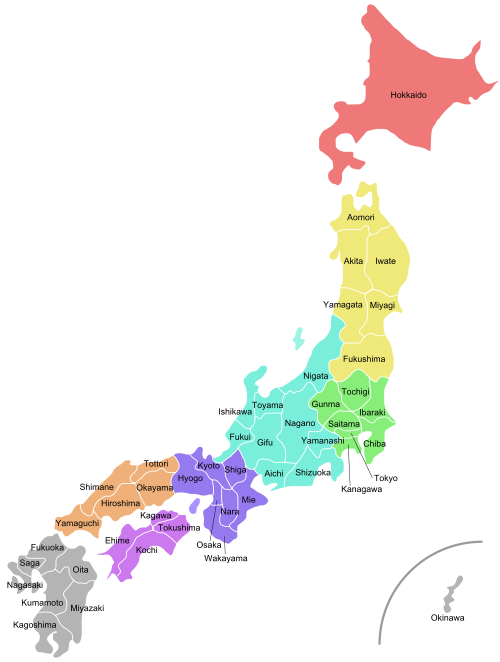
Japanese is an agglutinative languagedistinguished by a system of honorifics reflecting the hierarchical nature of Japanese society, with verb forms and particular vocabulary indicating the relative status of speaker and listener. Japanese writing uses kanji (Chinese characters) and two sets of kana (syllabaries based on simplified Chinese characters), as well as the Latin alphabet andArabic numerals.
http://www.japantravelinfo.com/news/news_item.php?newsid=431
http://www.jnto.go.jp/eq/eng/04_recovery.htm
stratovolcanic archipelago: four largest islands are Honshu, Hokkaido,Kyushu, and Shikoku (97% of Japan). Japan has the world's tenth-largest population
Japan is a member of the United Nations, the G7, the G8, and the G-20 major economies. Although Japan has officially renounced its right to declare war, it maintains a modern military with the world's eighth largest military budget
the Japanese population enjoying the highest life expectancy in the world and the infant mortality rate being the third lowest globally.[11][12][13]
About 73 percent of Japan is forested, mountainous, and unsuitable for agricultural, industrial, or residential use
Japan has 108 active volcanoes. Destructive earthquakes, often resulting in tsunami, occur several times each century.[78] The 1923 Tokyo earthquake killed over 140,000 people.[79] More recent major quakes are the 1995 Great Hanshin earthquake and the 2011 Tōhoku earthquake, a 9.0-magnitude[80] quake which hit Japan on March 11, 2011, and triggered a large tsunami.[52] Due to its location in the Pacific Ring of Fire, Japan is substantially prone to earthquakes and tsunami, having the highest natural disaster risk in the developed world.[81]
Japan's population is more than 127 million,[2] with 80% of the population living on Honshū. Japanese society is linguistically and culturally homogeneous
In 2003, there were about 134,700 non-Latin American Western and 345,500 Latin American expatriates, 274,700 of whom were Brazilians (said to be primarily Japanese descendants, or nikkeijin, along with their spouses),[149] the largest community of Westerners.[151]
Japan suffers from a high suicide rate.[169][170] In 2009, the number of suicides exceeded 30,000 for the twelfth straight year.[171] Suicide is the leading cause of death for people under 30.[172]
Japanese is an agglutinative languagedistinguished by a system of honorifics reflecting the hierarchical nature of Japanese society, with verb forms and particular vocabulary indicating the relative status of speaker and listener. Japanese writing uses kanji (Chinese characters) and two sets of kana (syllabaries based on simplified Chinese characters), as well as the Latin alphabet andArabic numerals.
The earliest works of Japanese literature include the Kojiki and Nihon Shokichronicles and the Man'yōshū poetry anthology, all from the 8th century and written in Chinese characters.[201][202] In the early Heian period, the system ofphonograms known as kana (Hiragana and Katakana) was developed. The Tale of the Bamboo Cutter is considered the oldest Japanese narrative.[203] An account of Heian court life is given in The Pillow Book by Sei Shōnagon, whileThe Tale of Genji by Murasaki Shikibu is often described as the world's first novel.[204][205]
During the Edo period, the chōnin ("townspeople") overtook the samurai aristocracy as producers and consumers of literature. The popularity of the works of Saikaku, for example, reveals this change in readership and authorship, while Bashō revivified the poetic tradition of the Kokinshū with his haikai (haiku) and wrote the poetic travelogue Oku no Hosomichi.[206] The Meiji era saw the decline of traditional literary forms as Japanese literature integrated Western influences. Natsume Sōseki and Mori Ōgai were the first "modern" novelists of Japan, followed by Ryūnosuke Akutagawa, Jun'ichirō Tanizaki, Yukio Mishima and, more recently, Haruki Murakami. Japan has two Nobel Prize-winning authors—Yasunari Kawabata (1968) and Kenzaburō Ōe (1994).[203]
Japanese cuisine is based on combining staple foods, typically Japanese rice ornoodles, with a soup and okazu — dishes made from fish, vegetable, tofu and the like – to add flavor to the staple food. In the early modern era ingredients such as red meats that had previously not been widely used in Japan were introduced.
Traditionally, sumo is considered Japan's national sport.[209] Japanese martial arts such as judo, karate and kendo are also widely practiced and enjoyed by spectators in the country. After the Meiji Restoration, many Western sports were introduced in Japan and began to spread through the education system.[210]Japan hosted the Summer Olympics in Tokyo in 1964. Japan has hosted the Winter Olympics twice: Sapporo in 1972 and Nagano in 1998.[211] Tokyo will host the 2020 Summer Olympics, making Tokyo the first Asian city to host the Olympics twice.
Baseball is currently the most popular spectator sport in the country.
Language in Japan[edit]
Main article: Languages of Japan
- Japanese language
- Japanese dialects
- Kansai dialect
- Saga-ben
- Wasei-eigo (Japanese English)
- Ryukyuan languages
- Foreign Variations
- Writing systems of Japan
My polyglot list

Spanish & codecademy.com
- Jay's Rosetta Stone
Japanese
- Top Amazon activity booklet
Interlingua/ Esperanto
- Unknown
Korean
German
French/ Italian
Thai/ Portugese

Tuesday, November 18, 2014
Buy
http://logs.omegle.com/50720e53
Barcharts
http://www.amazon.com/Japanese-Vocabulary-Quickstudy-Inc-BarCharts/dp/1572229195/ref=pd_cp_sw_3
1st ~ workbook
http://www.amazon.com/Japanese-Zero-Techniques-Students-Professionals/dp/0976998122/ref=pd_cp_sw_2
maybe ~ book
http://www.amazon.com/Japanese-Hiragana-Katakana-Beginners-Mastering/dp/4805311444/ref=pd_bxgy_sw_text_y
Start at "Immersion":
http://www.tofugu.com/2009/12/01/alternatives-to-rosetta-stone-japanese-i-e-should-i-buy-rosetta-stone/

Kanji: http://www.jlist.com/product/ASA051
PDF ~ http://mfadhillah.files.wordpress.com/2012/12/minna-no-nihongo-i-c3bcbersetzungen-grammatikalische-erklc3a4rungen-englisch.pdf#page=5
Companion Anki deck (of more:) https://ankiweb.net/shared/info/1318921220
■ There is no short cut but practice every day.
■ Do not use romanized Japanese or Romaji (Japanese written in English letters).
■ Use Japanese TV to get your ears used to Japanese.
■ It is very important to learn Kana.
■ Try to learn as much kanji as you can by using different means like cards or so.
Barcharts
http://www.amazon.com/Japanese-Vocabulary-Quickstudy-Inc-BarCharts/dp/1572229195/ref=pd_cp_sw_3
1st ~ workbook
http://www.amazon.com/Japanese-Zero-Techniques-Students-Professionals/dp/0976998122/ref=pd_cp_sw_2
maybe ~ book
http://www.amazon.com/Japanese-Hiragana-Katakana-Beginners-Mastering/dp/4805311444/ref=pd_bxgy_sw_text_y
Start at "Immersion":
http://www.tofugu.com/2009/12/01/alternatives-to-rosetta-stone-japanese-i-e-should-i-buy-rosetta-stone/
Kanji: http://www.jlist.com/product/ASA051
PDF ~ http://mfadhillah.files.wordpress.com/2012/12/minna-no-nihongo-i-c3bcbersetzungen-grammatikalische-erklc3a4rungen-englisch.pdf#page=5
Companion Anki deck (of more:) https://ankiweb.net/shared/info/1318921220
■ There is no short cut but practice every day.
■ Do not use romanized Japanese or Romaji (Japanese written in English letters).
■ Use Japanese TV to get your ears used to Japanese.
■ It is very important to learn Kana.
■ Try to learn as much kanji as you can by using different means like cards or so.
Subscribe to:
Posts (Atom)